An Interspecies Utopia Blended with Nature: A Deep Dive into the Pet-Friendly Space Co-created by THE DOG CAMPUS -KOISHIWARA and PETTY
4/5/20266 min read


Introduction: Reshaping the New Paradigm of Human-Pet Co-habitation in the Outdoors
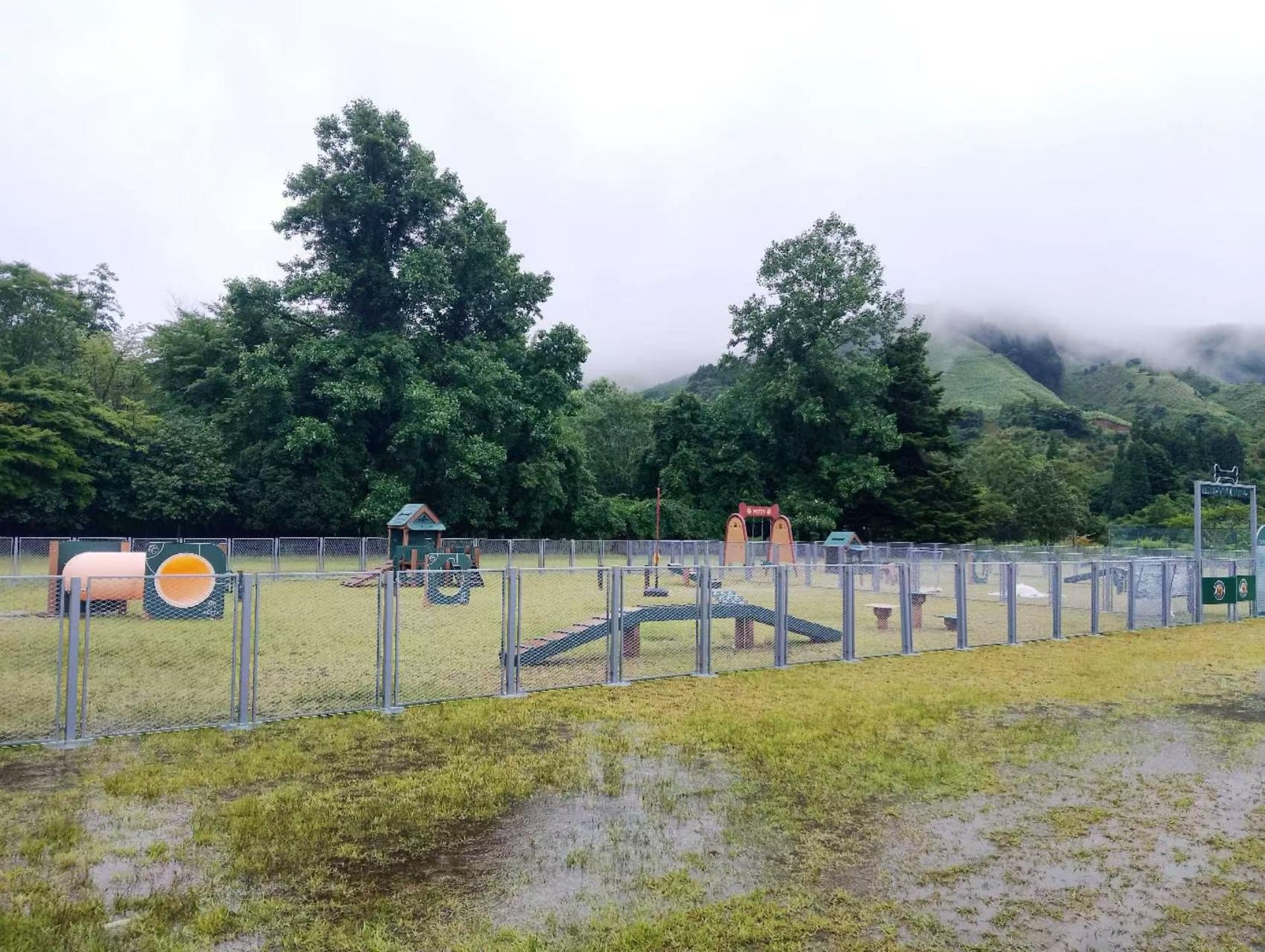
With the accelerating pace of modern urban life and the deepening concept of “pet humanization,” pet owners’ demands for traveling with their pets have comprehensively upgraded from simple “urban dog walking” to “immersive outdoor micro-vacations.” Against this backdrop, THE DOG CAMPUS -KOISHIWARA camp project emerged in the Koishiwara area of Toho Village, Asakura District, Fukuoka Prefecture, Japan. Surrounded by mountains and shrouded in mist, it boasts a unique, pristine natural endowment, making it a natural “healing-grade” outdoor camp.
However, how does one integrate professional play facilities that conform to modern commercial operational logic and deeply align with animal behaviorism into an area of pure, rustic nature? THE DOG CAMPUS -KOISHIWARA has delivered a benchmark-setting answer by joining forces with PETTY, a top-tier domestic expert in pet-friendly space design. By introducing PETTY’s professional spatial planning and customized equipment, this project upgrades an original meadow into a “Cloud-top Dog Academy” featuring comprehensive functions, scientific flow, and a dual-way experience for both humans and pets.
Part 1: Koishiwara’s Geographic Endowments and Cooperative Vision
THE DOG CAMPUS -KOISHIWARA is not positioned as a simple “fenced-in free-range” lawn, but rather a comprehensive outdoor CAMPUS dedicated to providing high-quality human-pet interaction, behavioral training, and natural healing.
Press enter or click to view image in full size
AspectDescriptionGeographic Coordinates & Natural AdvantagesNestled deep in the mountains of Kyushu Island, its cool microclimate and expansive natural meadows provide a natural “temperature control” safeguard for operating a large outdoor pet park. This significantly reduces the exercise risks for dogs in high-temperature environments and maximizes comfort for both visitors and their pets.Cultural Tourism Attribute & Ecological NicheAs an area near Fukuoka rich in pottery culture and mountain landscapes, Koishiwara’s location perfectly connects Fukuoka’s urban area with the surrounding mountain resort belt, making it a highly attractive “destination-style” leisure space.Strategic Site SelectionPETTY’s involvement was driven precisely by this unique natural foundation. The collaborative vision was clear: to create a pet-exclusive paradise with extremely high interactive value and safety factors under the philosophy of “low intervention, high functionality,” without disrupting Koishiwara’s original natural landscape.
Part 2: In-depth Logic and Rationality Analysis of PETTY’s Spatial Planning
Based on PETTY’s panoramic planning map, we can clearly see a rigorous, scientific, and warm spatial layout. This planning is not a random piling of elements but is built upon profound animal behaviorism and commercial operational logic.
1. Scientific Dual-Zone Physical Isolation: Eliminating Social Risks from Size Differences
The most prominent feature in the planning map is that the entire park is divided into two symmetrical yet independent activity areas by a sturdy and aesthetically pleasing fence. This is PETTY’s core planning based on pet social safety — a strict zoning mechanism for large and small dogs.
Press enter or click to view image in full size
Rationality Analysis: In vast outdoor environments, a dog’s running speed and territorial awareness are magnified. Unintentional collisions or the hunting instincts of large dogs can easily cause severe psychological trauma or physical harm to small dogs. Through the physical isolation of the central axis, THE DOG CAMPUS provides equal “rights to frolic” for dogs of different sizes. They can run freely within their respective safety boundaries while engaging in safe “sniffing socialization” at the central fence, greatly reducing conflict risks during park operations and providing owners with a worry-free play environment.
2. Complex Circulation Design: Guiding the “Explore-Consume-Calm” Emotional Loop
PETTY breaks away from traditional linear arrangements in equipment placement, adopting a layout that combines “scattered and clustered” elements.
Rationality Analysis: Dogs’ attention is easily distracted, and this staggered layout continuously stimulates their desire to explore. From the flat buffer at the entrance to the agility weaves at the edges, and finally to the free running on the central lawn, the space forms an invisible “complex circulation.” Dogs naturally experience an emotional loop in the park: “excited exploration -> intense physical consumption -> focused cognitive consumption among obstacles -> finally returning to the owner to calm down.” This circulation planning not only extends visitor stay times but also prevents overcrowding in specific areas.
3. “Human-Pet Dual-Friendly” Line of Sight and Relaxation Management
A pet park is not only a playground for dogs but also a social arena for owners. In PETTY’s planning, human relaxation facilities are cleverly distributed along the park’s perimeter and at core observation points.
Rationality Analysis: The iconic “paw-print shade umbrellas” and the surrounding green planter benches provide comfortable resting spots for pet owners. The design of these rest areas follows the logic of “panoramic, blind-spot-free monitoring.” No matter where the owner sits, they have an open field of vision to monitor their dog’s movements at all times. Meanwhile, the surrounding green planters beautify the environment and serve as soft isolation, providing a psychological safety distance for resting owners and achieving a perfect balance of human-pet interaction.
4. Natural Integration of Color and Texture
Visually, PETTY abandoned highly saturated, industrial colors in favor of forest greens, natural wood tones, and soft warm oranges that highly complement Koishiwara’s natural scenery.
Rationality Analysis: This color scheme not only appears premium and photogenic to humans (greatly encouraging visitors’ spontaneous sharing on social media) but also aligns with canine visual psychology. Low-saturation natural colors effectively reduce a dog’s tension when entering an unfamiliar environment, while contrasting colors on the facilities help them better identify obstacles, enhancing interaction safety.
Part 3: Hardcore Facility Support — PETTY’s Full Suite of Customized Agility and Interactive Equipment
Beyond scientific site planning, all pet interactive equipment used in THE DOG CAMPUS -KOISHIWARA project is deeply customized by PETTY. These devices are not only beautifully designed and made of eco-friendly materials (weather-resistant, anti-corrosive, safe, and non-toxic) but also play crucial roles in behavior correction and physical conditioning.
The following table outlines the core PETTY equipment actually implemented in the camp’s planning (covering agility, strength, and sensory training):
Equipment NameFunction & DescriptionDog Agility TunnelMade of high-strength eco-friendly materials, spacious and breathable inside. Tunnel training is vital for building confidence, effectively helping dogs overcome their fear of dark, enclosed spaces and exercising spatial awareness.A-Frame / RampA gentle climbing device designed with anti-slip ridges. Primarily used to strengthen hind leg pushing power and core muscles, while the transition between uphill and downhill exercises joint buffering capacity during centrifugal landings.Weave PolesVertically erected obstacle poles requiring dogs to weave in an S-shape. An excellent “mental consumption” device that cultivates focus and exercises spinal flexibility and physical coordination.Jump Hurdles / HoopsJumping facilities of moderate height. Satisfies a dog’s jumping instinct, enhances explosive power and visual distance judgment. Through owner-guided commands, it significantly boosts human-pet coordination.Balance BeamAn elevated, narrow walkway with a stable base and a special anti-slip surface. Mainly used to exercise proprioception and fine-tuned limb balance, teaching impatient dogs to walk slowly and attentively.Stepping StonesIndependent pillars of varying heights. Dogs must jump or step with precise landing judgments, effectively correcting unilateral muscle compensation caused by daily leashing through gentle, therapeutic exercise.Pet Hideaway HutA small wooden shelter space. Provides a safe sanctuary for introverted, easily nervous dogs, or those needing alone time after prolonged play, allowing them to retreat and lower their heart rates at any time.Paw-print Shade Structures & SeatingRelaxation facilities combining strong landmark appeal with practical shading. The wide canopy provides outdoor shade, while the bottom stools create a core social station for owners to interact and rehydrate their dogs between play sessions.Safety Fencing & Entry GatesThe entire area utilizes PETTY’s custom metal protective mesh, with thickened bottoms to prevent small dogs from squeezing through. Equipped with a double entry system (anti-dash buffer design) to ensure absolute safety, featuring clear project and brand logos on the gate to highlight professionalism.
Conclusion: Building a Human-Pet Symbiotic Benchmark for High-Quality “Micro-Vacations”
The deep collaboration between THE DOG CAMPUS -KOISHIWARA and PETTY demonstrates the correct approach to future outdoor pet-friendly spaces. It is no longer an extensive venue rental, but rather a warm, orderly, and commercially vibrant “interspecies utopia” created through the high integration of behavioral planning, aesthetic design, and professional equipment.
Here, dogs can unleash their natural instincts to chase, sniff, and climb without reservation; owners can enjoy high-quality companionship time with their beloved pets amidst green mountains and clear waters. Relying on its outstanding spatial planning capabilities, PETTY has not only maximized Koishiwara’s natural geographic advantages but also injected strong brand competitiveness and sustained appeal into the entire project. It is foreseeable that as the camp continues to operate, it will inevitably become a highly sought-after outdoor healing destination for many pet-owning families, leading the pet cultural tourism industry towards a more professional, refined, and high-quality new stage of development.